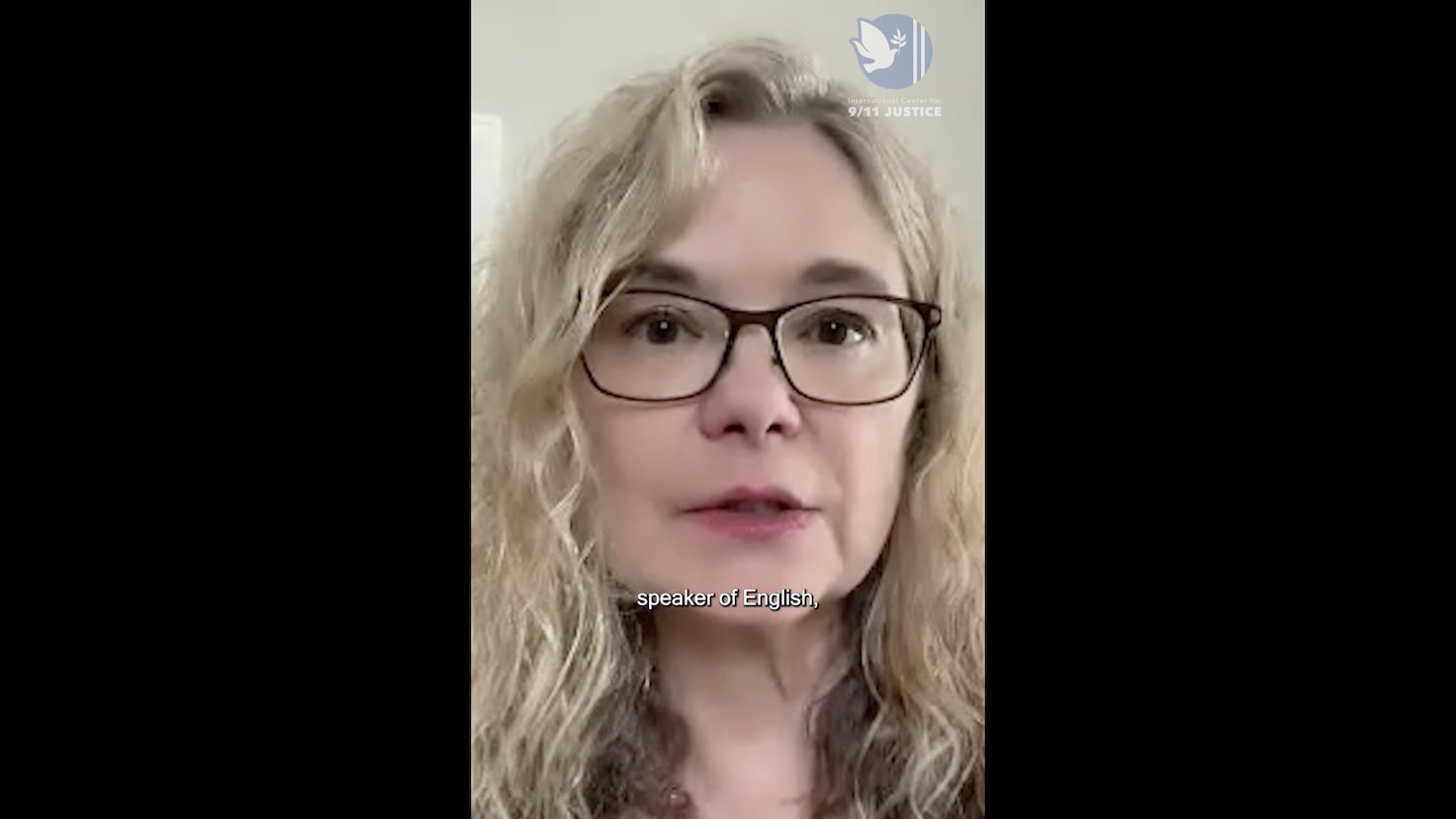
Earlier this year, distinguished forensic linguist Natalie Schilling, Ph.D., Professor Emerita of Linguistics at Georgetown University, published a groundbreaking analysis of several pieces of audio central to the official account of the 9/11 hijackings.
Her most significant finding concerned the infamous “We have some planes” transmissions, which the 9/11 Commission attributed to Mohamed Atta aboard American Airlines Flight 11 and which it used as the title of Chapter 1 of the 9/11 Commission Report. Schilling found that the speaker exhibits several linguistic features inconsistent with what would normally be expected of a native Arabic speaker and more consistent with certain Caribbean and West African varieties of English.
WATCH: Was that really Mohamed Atta?
Today, we’re releasing a new YouTube “short” featuring Dr. Schilling explaining, in her own words, the remarkable finding that the Flight 11 voice is not consistent with that of a native Arabic speaker.
This three-minute video is an easy way to introduce friends, family, and fellow activists to an intriguing new line of 9/11 research.
ADDENDUM: What did CeeCee Lyles whisper?
We’re also publishing a new nine-page addendum to Schilling’s original report. It takes a much deeper look at another central piece of 9/11 audio: the whispered utterance heard at the very end of the voicemail left by United Airlines Flight 93 flight attendant CeeCee Lyles for her husband.
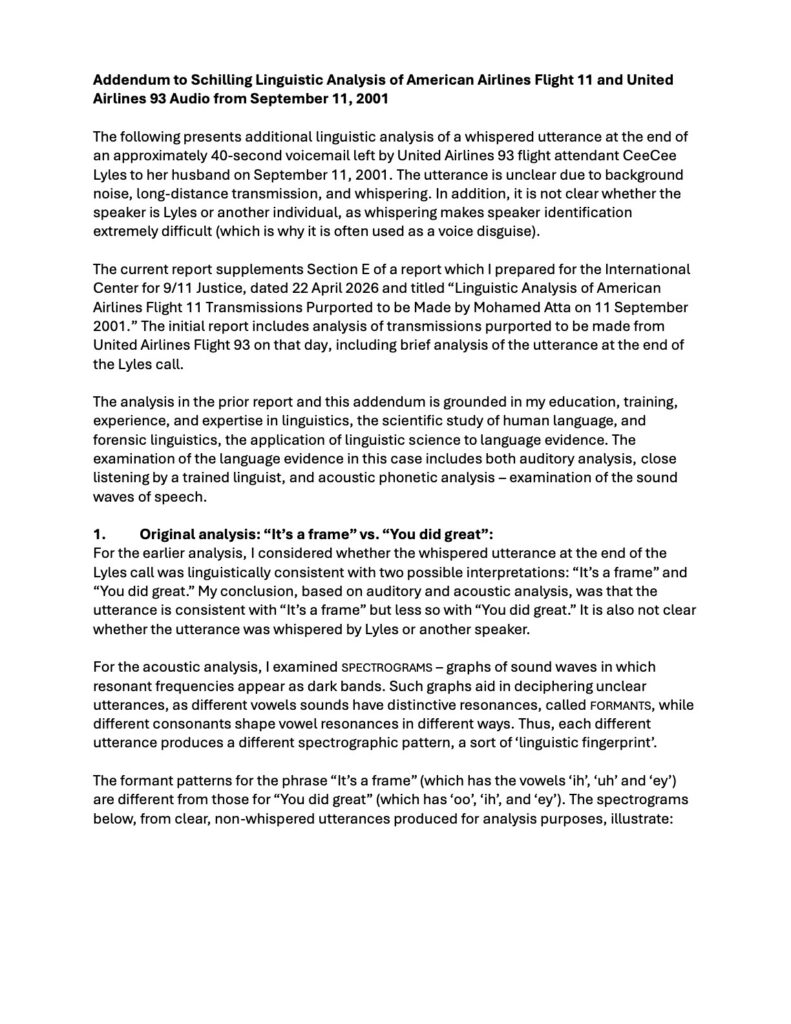
In her original analysis of that whisper, Schilling found it more consistent with “It’s a frame” than with the interpretation suggested by some 9/11 researchers, “You did great.”
In the new addendum, Schilling subjects the audio to further auditory, acoustic, and contextual analysis, comparing it with several additional possibilities, including “It’s a fake,” “It’s a shame,” and “He’s afraid.”
After examining the sound patterns and context in detail, Schilling concludes that her original finding stands: “It’s a frame” is the most likely interpretation of the words spoken at the end of the voicemail.
Importantly, Schilling emphasizes that three factors — the background noise, the long-distance transmission, and the fact that it’s a whisper — combine to make definitive identification impossible. She also notes that it cannot be determined with certainty whether the words were spoken by Lyles or by another person.
Taken together, Schilling’s original report and this new addendum raise profound questions about some of the key communications purportedly made from the planes on September 11, 2001.
If CeeCee Lyles indeed said “It’s a frame” to her husband, what did she mean?
If the voice in the Flight 11 transmissions is not that of a native Arabic speaker and since Atta’s known language exposure cannot explain why he would have adopted a Caribbean or West African accent, then who was speaking? And did that person actually commandeer Flight 11?